


For thousands of years, these ancient writing systems have resisted every attempt at decipherment — and what they might tell us about the ancient world remains one of archaeology's greatest unsolved mysteries.
As archaeologists peer into the darkness of underground caverns and touch walls unseen for thousands of years, they may tremble as Heinrich Schliemann did during his excavations at Troy and Mycenae. Schliemann uncovered evidence of Bronze Age civilizations whose existence had long been doubted, helping inspire later discoveries of inscriptions that would transform the study of the ancient Aegean. Though he was not a decipherer, Schliemann believed that archaeology could reveal forgotten civilizations whose voices had been lost. Solving the mysteries of the past requires reconnecting with voices that have been silent for millennia. The challenges seem insurmountable.
- New AI Algorithm is Cracking Undeciphered Languages
- Artificial Intelligence Inching Closer to Deciphering Long Lost Languages
Ancient inscriptions are deciphered using evidence and context from the site where they are recovered. Often, discovering the key to translation takes decades and is a collaborative effort. Individual symbols are less important than patterns in the inscription. Yet, every inscription is a message from people trying to communicate across time. Yuri Knorozov, a Soviet linguist, epigraphist and ethnologist, is best known for deciphering the ancient Maya script. His breakthrough paper published in 1952 transformed Mesoamerican studies by demonstrating that Maya glyphs combined phonetic and logographic elements. He believed that no script is inherently undecipherable if sufficient evidence survives, and observed that,“what is created by one human mind can be unraveled by another.”
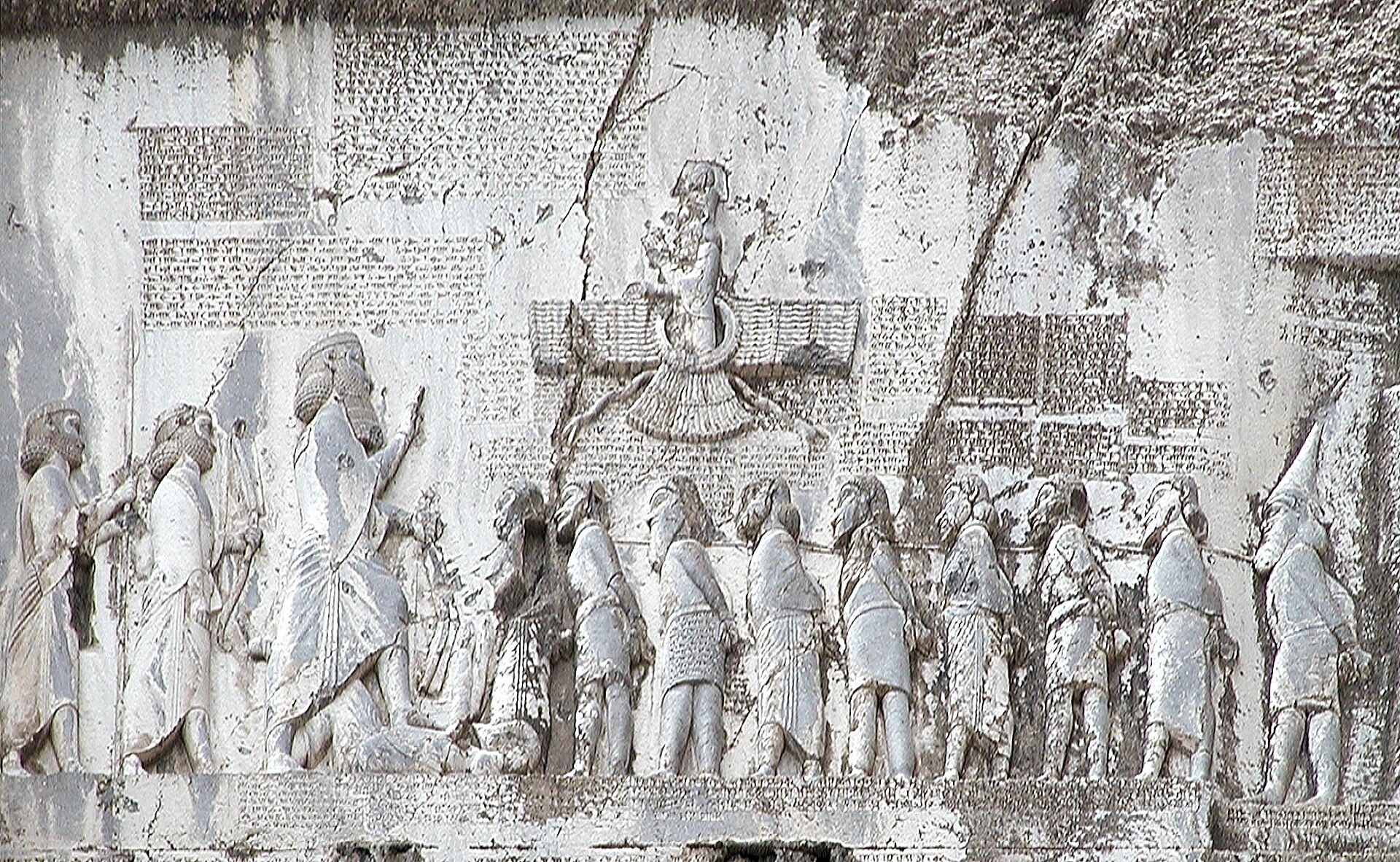
The Behistun Inscription was commissioned by Darius I of Persia. (Hara1603/Public Domain)
What Makes a Language "Ancient" — and Why So Many Were Lost
Languages age and change constantly. New words and meanings are added to describe inventions and technology. Older words fall out of use, and their meanings change as well. Today, the word bully refers to an intimidating person, but Shakespeare used bully to mean sweetheart. Technology adds meaning to words like capsule and mouse. New words are imported from other world languages for use in a new language. Names of foods such as tortilla, croissant, and lasagna become part of a new language when their native speakers move around the world.
Advances in global communications have spread modern languages rapidly, and instant translation devices help readers understand the meaning. Archaeologists, historians, and linguists study languages that were spoken in ancient civilizations, but are no longer in use. Scholars encounter these languages through historical and archaeological research and use them to understand the cultural contexts of the ancient world. One example of a unique challenge lies in interpreting the famous Vinča symbols which date to 5300 BC, long before the Mesopotamian cuneiform which is generally held as the oldest known form of writing. The problem with the Vinča symbols lies in the lasting debate on whether they can be considered a true writing system at all.
- Ancient Cuneiform Tablets Instantly Deciphered By Revolutionary Methods
- The Enigmatic and Undeciphered Voynich Manuscript Unlikely to be a Hoax
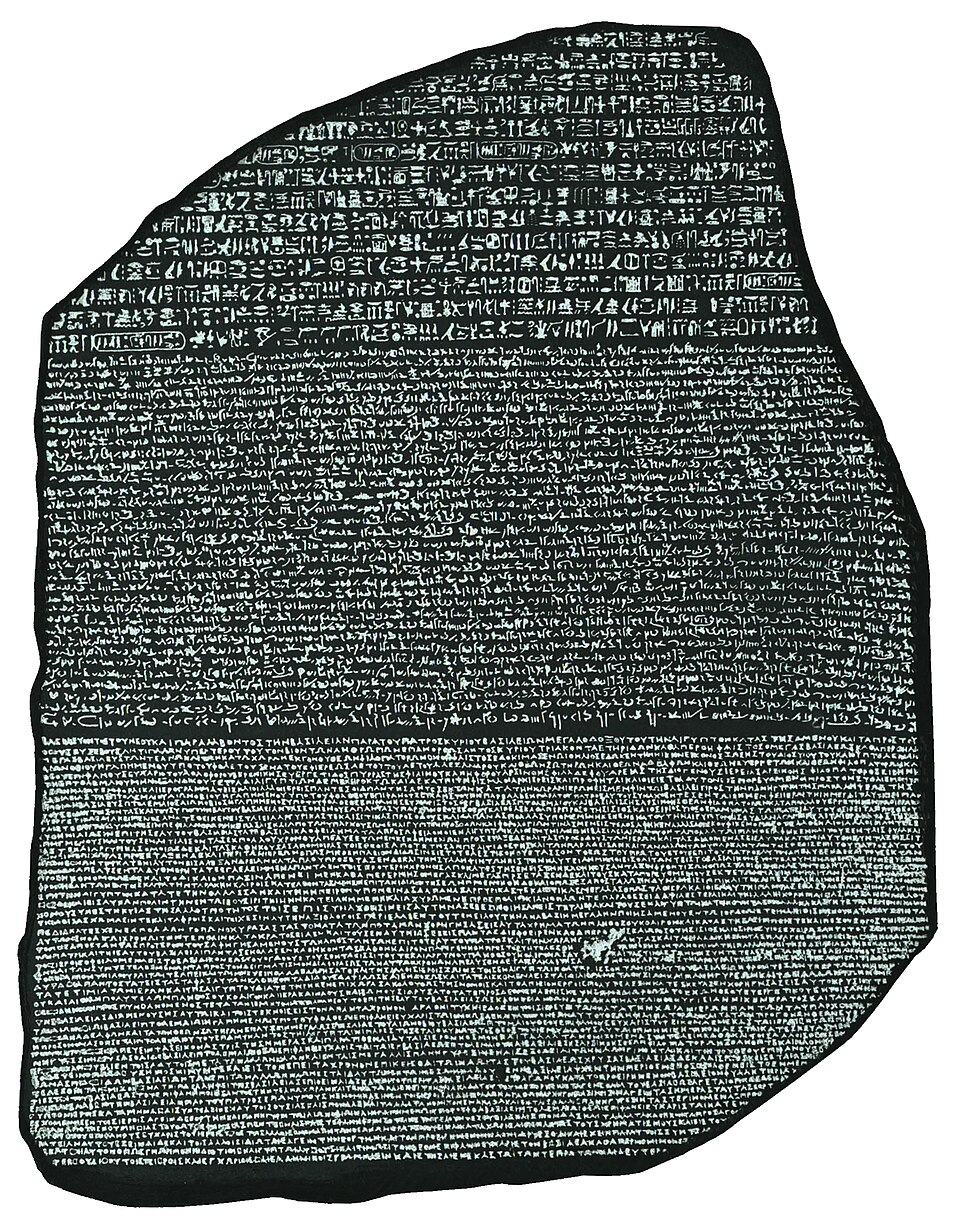
Rosetta Stone, 196 BC (British Museum/Public Domain)
Famous Ancient Languages: From Egyptian Hieroglyphs to Sanskrit
Frequently, indigenous languages, such as Cherokee, are preserved by the few living speakers who prepare dictionaries and audio recordings. Latin was once spoken throughout the Roman Empire, and it became part of the Romance languages of Europe. The Catholic Church still uses Latin in religious services and readings. Ancient Greek became the language of philosophy, science, literature, and administration throughout much of the eastern Mediterranean. Sanskrit was the classical language of India, and Hebrew is the liturgical language of Judaism. The most famous deciphering of an ancient language was Jean-François Champollion’s explanation of the Rosetta Stone. In 1822, combining his own work with the discoveries of many other linguists, he demonstrated how to read dozens of hieroglyphic names from the Greco-Roman period of Egypt, such as Caesar, Cleopatra, and Ptolemy. His breakthrough came when he decided that Egyptian hieroglyphics were not purely symbolic but included phonetic components. They represented both sounds and ideas. Champollion’s fluency in Coptic, a later language derived from ancient Egyptian, inspired his correlation of Egyptian words and grammar with hieroglyphics.
- Artificial Intelligence Inching Closer to Deciphering Long Lost Languages
- Google AI Decodes Broken Greek Texts Better than Humans | Ancient Origins
Why Ancient Scripts Are So Difficult to Decipher
No “Rosetta Stone”
Champollion deciphered Egyptian hieroglyphics because the Rosetta Stone displayed the same text in Greek, Demotic, and Hieroglyphic. Most ancient languages lack bilingual translations.
Few Texts Survive
Languages like the Phaistos Disc script have very few surviving examples for comparing grammatical patterns or repeated phrases.
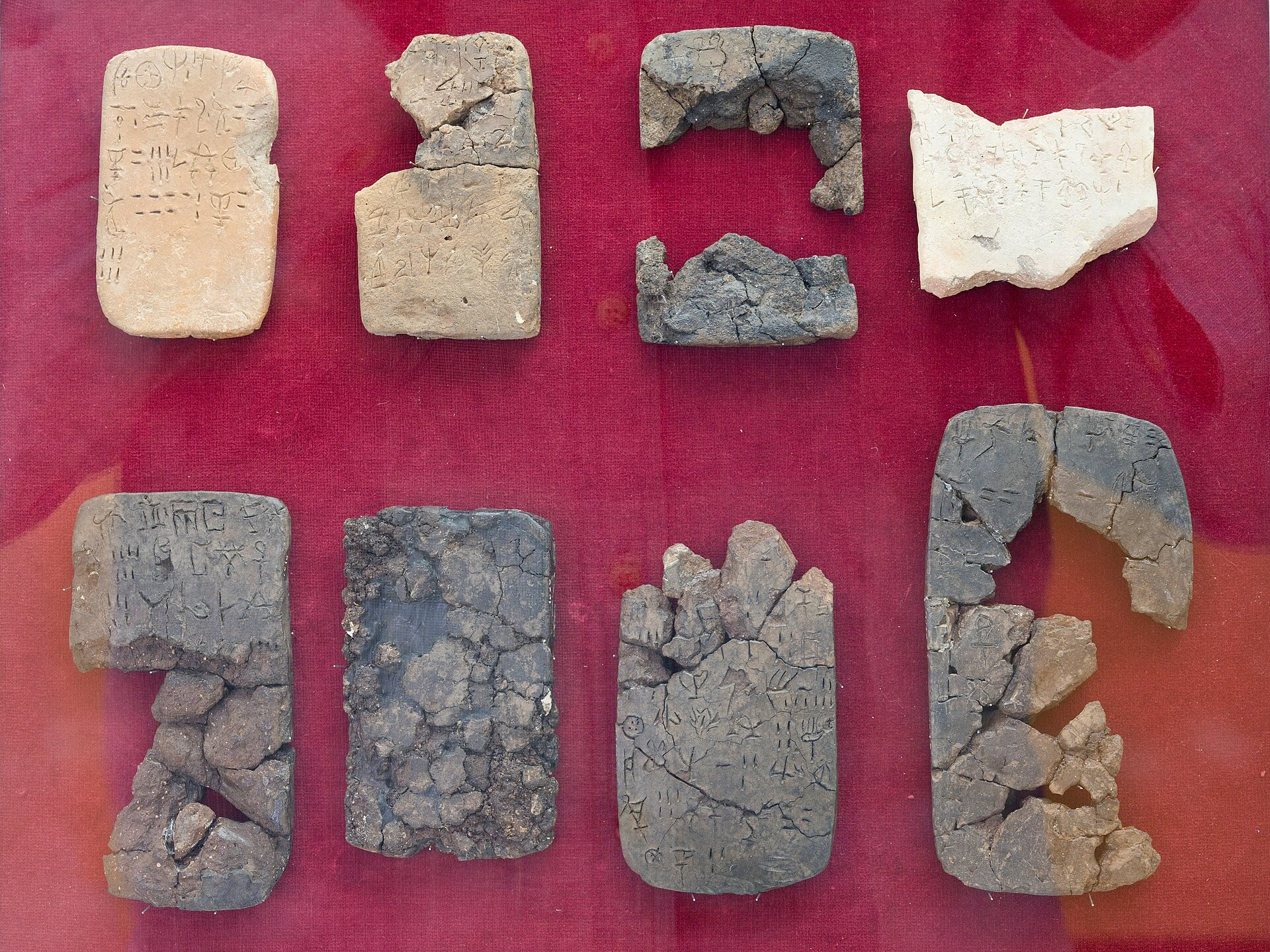
Fragments of Linear A tablets from Bronze Age Crete.Zde/Creative Commons BY-SA 4.0
Unknown Language Family
Researchers have no starting point for analysis of vocabulary or grammar if they cannot connect a language to a known language family. Linguists recognize hundreds of language families worldwide, though the exact number remains debated. The ones most helpful in deciphering ancient languages are the following:
- Indo-European: Includes languages like Latin and Greek; the Indo-European family is the language foundation of many ancient inscriptions and documents.
- Semitic: Hebrew and Arabic are part of this important family, which facilitates understanding ancient Near Eastern scripts.
- Sino-Tibetan: Helpful in deciphering ancient Chinese texts and inscriptions.
- Afro-Asiatic: Ancient Egyptian and Berber languages are in this family; knowledge of Afro-Asiatic languages helps to decipher hieroglyphs and inscriptions.
- Dravidian: Useful for analysis of South Indian languages and their scripts.
- Turkic: Help scholars interpret medieval inscriptions and historical texts from Central Asia.
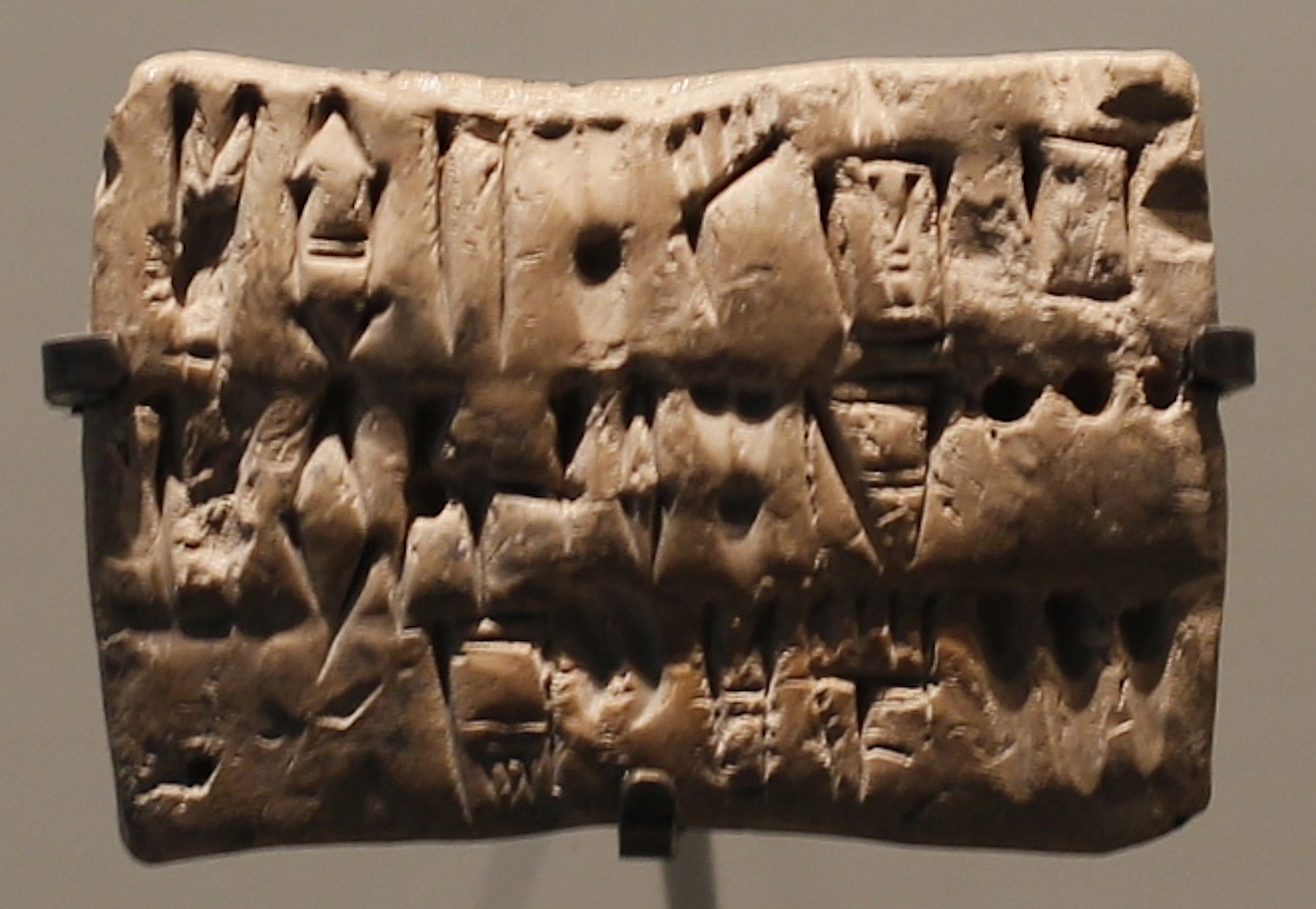
Proto-Elamite administrative tablet from ancient Iran (VIGNERON/Creative Commons BY 3.0)
Short Inscriptions
It is difficult to decipher scripts from seals, labels, or short messages. For example, most Indus inscriptions contain fewer than ten signs.
Lack of Cultural Context
If researchers have evidence of geography, religion, type of government, or personal names, deciphering the language is easier. Civilizations without written historical records leave fewer clues.
The Ancient Writing Systems That Still Cannot Be Read
Researchers hope for a breakthrough that will lead to deciphering the languages that have not been analyzed. Some are identified as a proto-language. A proto-language is a hypothetical ancestral language from which a group of later languages evolved. Linguists reconstruct proto-languages by comparing related languages and working backward to identify their common features. For example, English, German, Dutch, Swedish, and many other European languages are related. Linguists believe they descended from a common ancestor called Proto-Germanic. Each undeciphered language presents unique problems for researchers, but there is hope that computer technology can assist in pattern analysis.
- New Paleo-Hispanic Alphabet Discovered in Spain
- The Curious Phaistos Disc – Ancient Mystery or Clever Hoax?
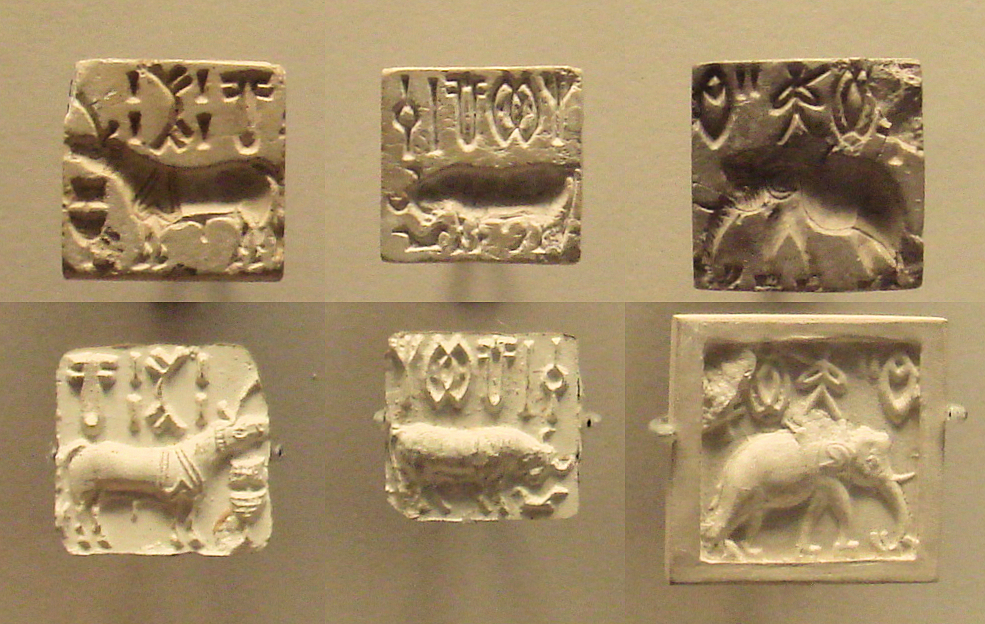
Indus Valley seals with script inscriptions. (ALFGRN/CC BY-SA 2.0)
Linear A, Rongorongo, and the Scripts That Defy Modern Scholarship
- Linear A script continues to be a subject of intense scholarly debate. Scholars want to know the origin of the Minoan language it represents. The Minoans on Crete used it between 1800 and 1450 BC.
- Proto-Elamite was used in ancient Iran around 3100–2900 BC. Researchers believe that efforts to decipher an ancient Iranian writing system called Linear Elamite may provide a bridge for Proto-Elamite. Francois Desset, a French archaeologist leading a group of European researchers, thinks they have made progress. They used ancient silver beakers with inscriptions to develop a method for reading Linear Elamite symbols. If their findings are correct, they could provide insights into a little-known society that existed between Mesopotamia and the Indus River Valley at the dawn of civilization. The story goes back more than 5,000 years to a city called Susa, which was part of the early development of written language in the region.
- The Indus Valley Script is linked to the Indus Valley Civilization between 2600 and 1900 BC. It was an early urban culture located in Pakistan and northwest India. The script is found on pottery and seals. Some scholars argue that the Indus symbols constitute a true writing system, while others believe they represent a nonlinguistic symbol system.
- The surviving Rongorongo inscriptions were recorded in the nineteenth century, though the origins of the script remain uncertain. It is believed to be the only script indigenous to Oceania. The script consists of intricate, repetitive glyphs carved on wood, and it's thought to have been a central part of the island’s Rapa Nui people’s culture.
- Cretan Hieroglyphs appeared in Crete during the early second millennium BC.
- The Phaistos Disc, discovered in Crete, dates back to the Minoan Bronze Age in the 2nd millennium BC. It is a fired clay disc with unique hieroglyphic symbols in a spiral arrangement on both sides. Scholars do not understand the significance of the symbols or the purpose of the disc. It might be a hymn, a story, or a coded message.
- The Etruscan Language was used in ancient Italy. Linguists understand portions of Etruscan vocabulary and grammar through a large corpus of inscriptions, supplemented by a limited number of bilingual texts. The Etruscans influenced Roman culture.
- The Olmec Script is associated with one of Mesoamerica’s major civilizations. Proposed Olmec writing systems remain controversial, and no consensus decipherment exists. Key artifacts, such as the Cascajal Block and markings on La Venta Monuments, provide limited evidence of this system. There are very few artifacts with the script, and there is no bilingual artifact to help with meaning.

Etruscan Inscription Tablet (Shonagon/CC0 1.0)
Role of Technology in Deciphering Ancient Languages
Technology is set to transform the analysis of ancient languages. First, artificial intelligence can use machine learning algorithms to identify patterns and make predictions for decoding. 3-D imaging and digitization offer an opportunity to recreate the inscriptions or texts, preserving them for future study and sharing them with researchers worldwide.Computational linguistics automates the analysis of large amounts of text. This can speed up the pattern identification, especially in languages with a large amount of surviving text.
Dr. Jacob Dahl of Oxford University studies Proto-Elamite, one of the world's oldest undeciphered writing systems. As a pioneer of technology in the analysis of ancient languages, he intends to uncover its 5,000-year-old secrets. Through technology, he can see the writing more clearly than ever before. His specialized device is providing the most detailed and high-quality images ever taken of symbols carved into clay tablets. According to Dr. Dahl’s BBC interview, this way of capturing images, developed by academics in Oxford and Southampton, is being used to help decode a writing system called proto-Elamite, used between around 3100 BC and 2900 BC in a region now in the southwest of modern Iran.
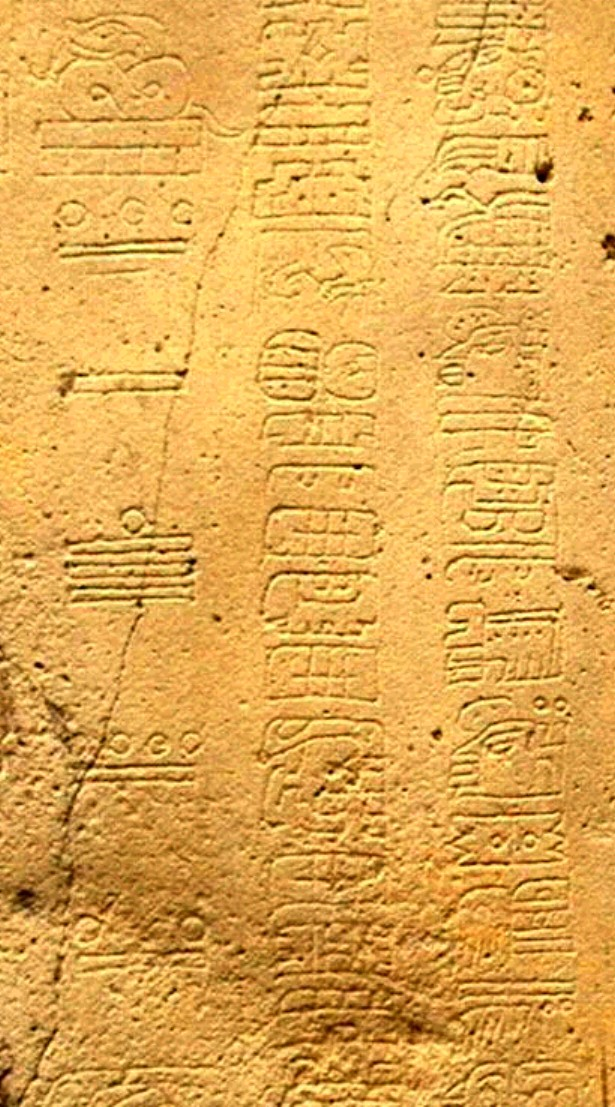
Olmec Script inscription (Maunus/CC BY-SA 3.0)
Dahl's Oxford team thinks that they could be on the brink of understanding many undeciphered texts from the ancient world. Dahl has suggested that Proto-Elamite may reflect a less standardized scribal tradition than later Mesopotamian writing systems:
"The lack of a scholarly tradition meant that a lot of mistakes were made, and the writing system may eventually have become useless."
Dr. Dahl points out that AI and other software are very helpful to researchers, but there are jobs AI does well and others it cannot. AI can detect patterns, do statistical modeling, and produce data visualization. AI cannot do cultural interpretation or discern contextual meaning. Human expertise is necessary to make sense of the information that AI uncovers.
Top Image: Jean-François Champollion (1790–1832), the French scholar whose decipherment of Egyptian hieroglyphs in 1822 transformed Egyptology. Source:(Louvre Museum/Public Domain)
By Ramsey Hardin
References
Archaeologist. 2025. “The Rosetta Stone and the Deciphering of Egyptian Hieroglyphs.” The Archaeologist. https://www.thearchaeologist.org/blog/the-rosetta-stone-and-the-deciphering-of-egyptian-hieroglyphs
Coughlan, Sean. 2012. “Breakthrough in world's oldest undeciphered writing.” BBC. https://www.bbc.com/news/business-19964786
Inforsome. 2023. “Unravelling the Challenges of Interpreting Ancient Languages.” Inforsome. https://inforsome.com/unraveling-the-challenges-of-interpreting-ancient-languages
Scalf, Foy. n.d. “The Rosetta Stone: Unlocking the Ancient Egyptian Language - ARCE.” American Research Center in Egypt. Accessed June 12, 2026. https://arce.org/resource/rosetta-stone-unlocking-ancient-egyptian-language/
Vasilousis, Dimosthenis. 2023. “7 Lost Languages and Scripts that have not yet been Deciphered.” The Archaeologist. https://www.thearchaeologist.org/blog/7-lost-ancient-languages-and-scripts-that-have-not-yet-been-deciphered
The Word 360. 2025. “The Complete Guide to Decoding Ancient Languages Without a Rosetta Stone.” The Word 360. https://theword360.com/2025/03/10/the-complete-guide-to-decoding-ancient-languages-without-a-rosetta-stone/